

Explosives Found at New Asylum Centre Site in Nuenen: A Dangerous Delay?
Nuenen, 18 June 2026
A pipe bomb and fireworks mortar were discovered at a Dutch asylum centre construction site, halting work and raising alarms. The incident, found during routine groundwork, has sparked outrage from officials and fears over safety for future residents. With the centre set to open in August, delays could worsen the Netherlands’ asylum housing crisis. Authorities are investigating, but the motive—and whether it’s linked to local opposition—remains unclear. This isn’t the first act of vandalism at the site, but the use of explosives marks a dangerous escalation.
The Discovery: Explosives Found During Routine Construction
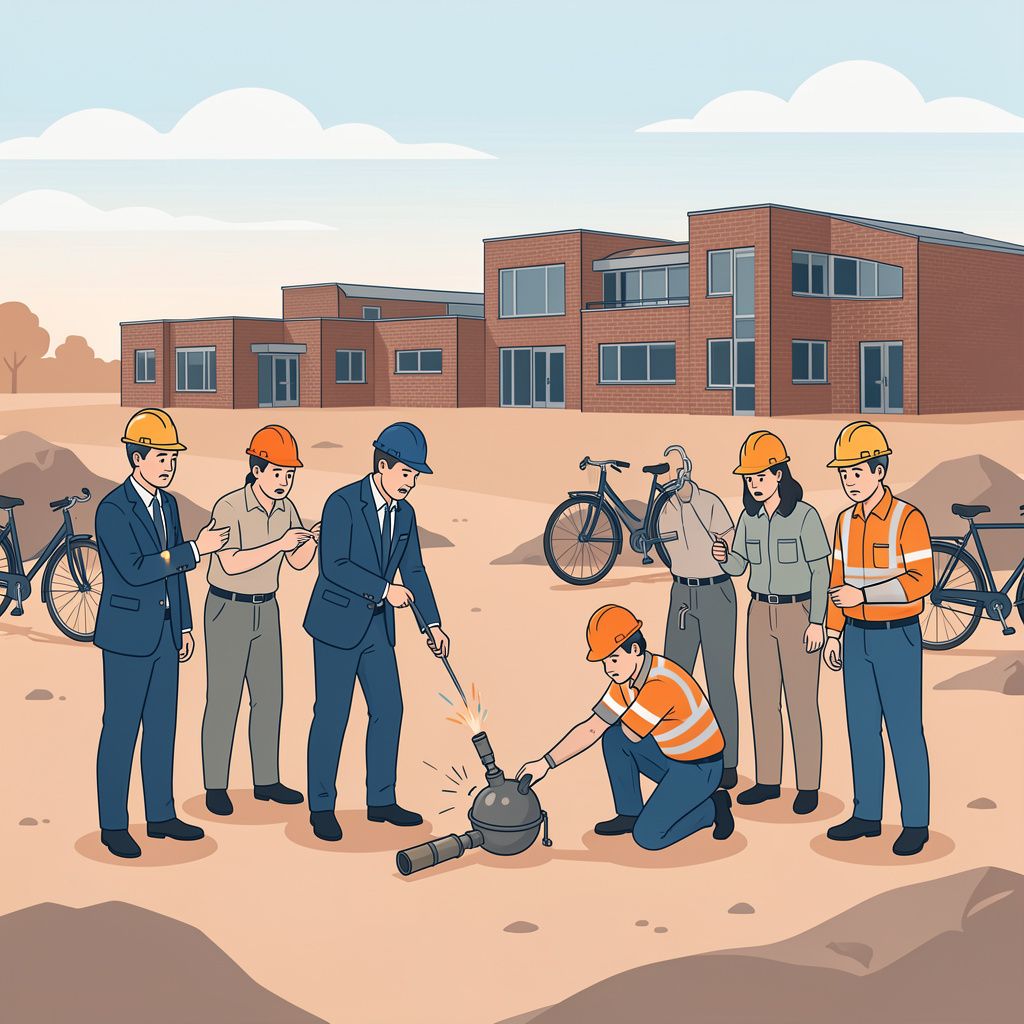
At 07:20 on Thursday, 18 June 2026, construction workers at the future Asylum Seekers Centre (AZC) in Nuenen, Netherlands, made a shocking discovery. During routine groundwork at the site on Pastoorsmast, they found a broken window and suspicious objects inside the building. Upon closer inspection, the objects were identified as a fireworks mortar and a pipe bomb [2][5]. The area was immediately cordoned off, and specialists from the police and the Explosive Ordnance Disposal Service (EOD) were called to the scene. The EOD confirmed the presence of explosives and safely disposed of them [2]. No injuries were reported, but the incident has raised serious concerns about the safety of both construction workers and future residents [1][2].
Local Officials React with Shock and Condemnation
Local officials have expressed their shock and condemnation following the discovery. Nuenen Mayor Freek van Genugten stated, “It is naturally unacceptable that in this way a dangerous situation arises for the people on site and the residents. These actions go against the hospitable municipality we want to be for people in need of our help” [2][6]. The Central Agency for the Reception of Asylum Seekers (COA) also released a statement, saying, “It is of course every time shocking, but also appalling that these sorts of things happen. That people are against the arrival of an AZC or have questions, there are conversations for that and other legal possibilities. But that there are, in whatever way, other actions involved, we not only regret that, but we also express our disgust about it” [5]. The Public Prosecution Service (OM) has launched an investigation to determine the perpetrators and motives behind the incident [2].
Project Timeline and Capacity: Delays Could Worsen Housing Crisis
The AZC in Nuenen was scheduled to open in the second week of August 2026, with a capacity to house up to 159 asylum seekers for a maximum of ten years [3]. The discovery of explosives has forced a temporary halt to construction, and the COA has not yet announced a revised timeline for completion [1]. This delay could exacerbate the ongoing shortage of reception places in the Netherlands, where the demand for asylum housing continues to outstrip supply [GPT]. As of June 2026, the Dutch Minister of Asylum and Migration has called on all municipalities to increase reception capacity due to sustained pressure on the asylum chain [7]. The Nuenen AZC was intended to alleviate some of this pressure, but the incident has cast doubt on whether the original timeline can be met [3].
Safety Measures and Next Steps
In response to the incident, the COA has announced increased security measures at the Nuenen site, including additional surveillance cameras and on-site security personnel [5]. The organisation has also reiterated its commitment to proceeding with the project, stating that the discovery of explosives does not, in principle, alter the planning for the AZC’s opening [5]. Meanwhile, the police and OM continue their investigation, with a focus on determining whether the explosives were planted in direct opposition to the AZC or if the site was used for unrelated purposes [2]. The incident has sparked a broader debate about the safety and security of asylum centres in the Netherlands, particularly in areas where local opposition has been strong [6]. As the investigation unfolds, the future of the Nuenen AZC—and its potential to ease the national housing crisis—hangs in the balance [3][5].
Bronnen
- www.facebook.com
- www.nuenen.nl
- www.volkskrant.nl
- www.omroepbrabant.nl
- www.ijmuidercourant.nl
- www.omroepbrabant.nl
- www.instagram.com